Coffee Grinders
Best Manual Coffee Grinders
Hand grinders that deliver excellent grind quality when you trade motor speed for value, quiet, and portability.
Short answer
A manual coffee grinder is worth it when you prioritize grind quality, portability, quiet mornings, and price over speed. Choose a quality burr hand grinder for filter and travel first; pick a higher-resolution model only if you will use it for espresso and accept the workout.
Manual coffee grinders can offer excellent grind quality for less money than comparable electric grinders, but the tradeoff is speed and physical effort. Based on category research—burr design, adjustment systems, build, and intended use—we recommend starting with a well-built conical hand grinder and matching capacity and adjustment resolution to pour-over, travel, or espresso goals.
Quick Picks
Best Budget
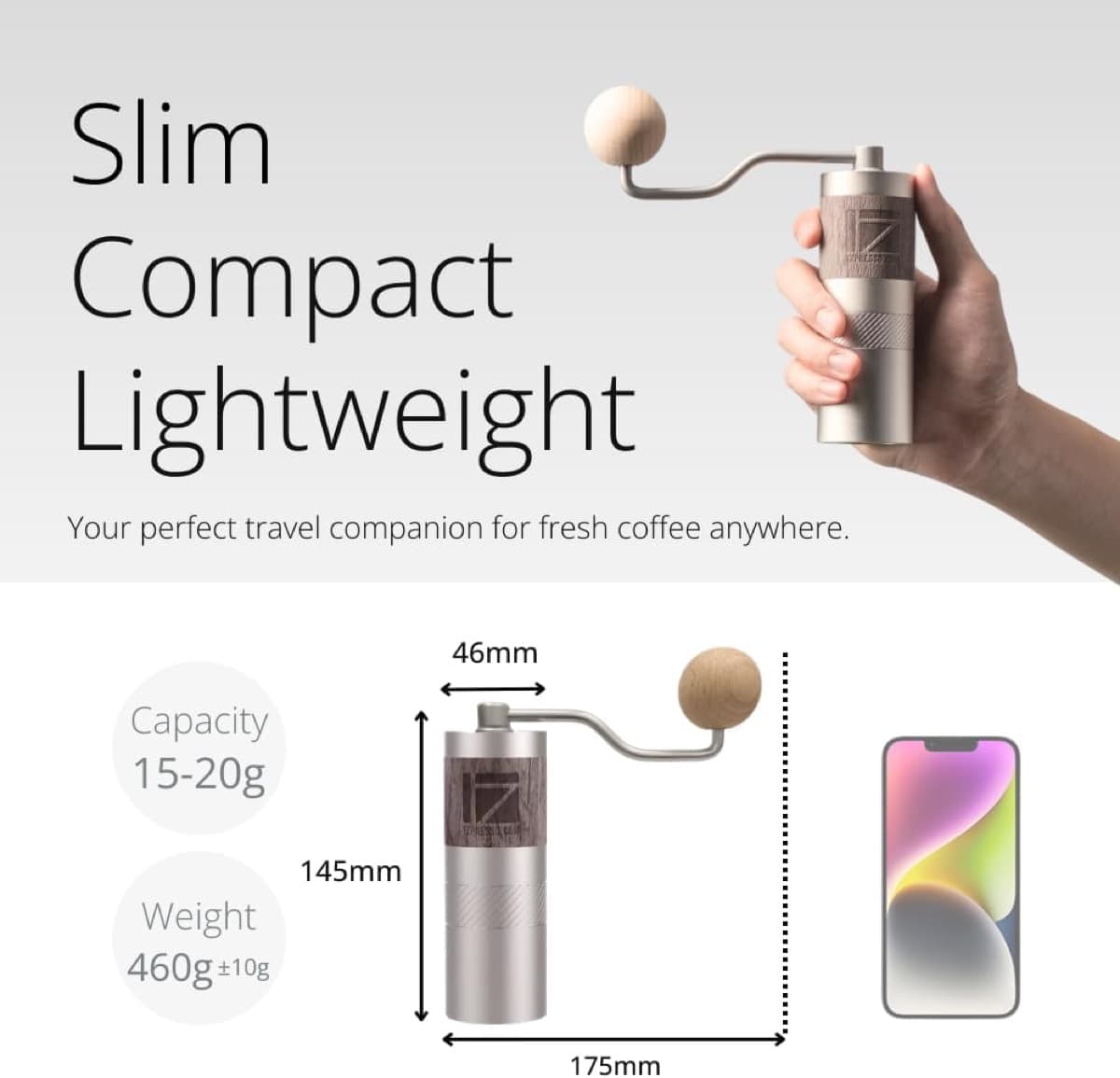
1Zpresso Q2-class
Real burrs under $100 beat most cheap blade electrics for filter.
Often under $100
Best for Espresso
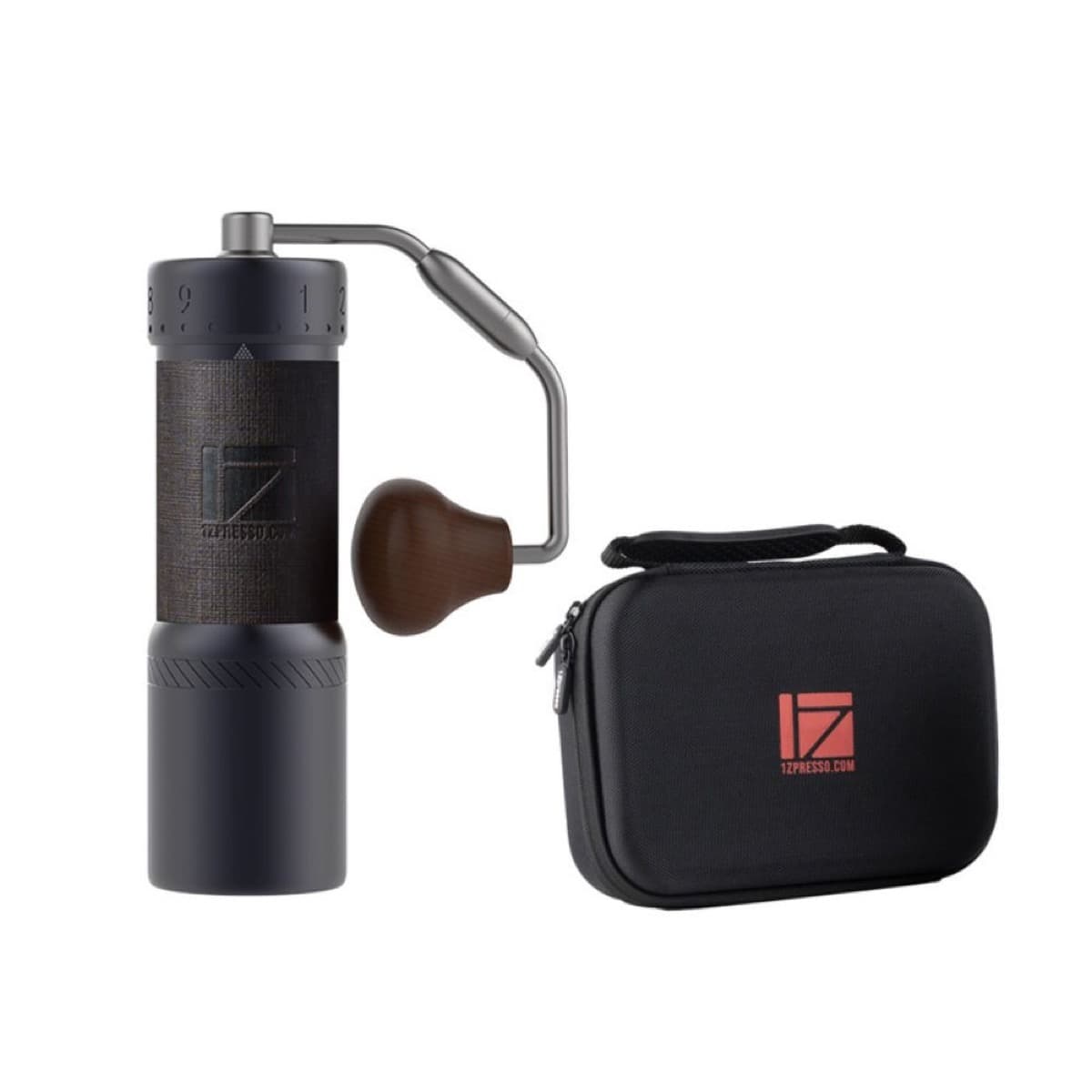
Higher-res espresso manual class
Fine, high-resolution adjustment—only if you accept longer grind times.
Often $150–$300+
Best for Pour-Over
1Zpresso Q2-class
Quiet consistency per dollar for V60, Kalita, and AeroPress routines.
Often $50–$150
Best for Travel
1Zpresso Q2-class
Compact body, no outlet needed, easy to pack with a pour-over kit.
Often $50–$150
Best Premium
Higher-res espresso manual class
Premium build and espresso-oriented resolution when you will use it weekly.
Often $150–$300+
Manual Grinder Comparison
| Grinder | Best For | Typical Price | Burrs | Espresso? | Brew Methods | Portability | Capacity | CTA |
|---|---|---|---|---|---|---|---|---|
| 1Zpresso Q2-class | Overall / travel / beginners | Often $50–$150 | Conical | Light experiments | Excellent filter | Excellent | 1–2 cups | See Price |
| 1Zpresso Q2-class | Best budget | Often under $100 | Conical | Limited | Pour-over & AeroPress | Excellent | 1–2 cups | See Price |
| Higher-res espresso manual | Best for espresso | Often $150–$300+ | Conical (fine adj.) | Capable with effort | Good | Good | Single dose | See Price |
Best Manual Coffee Grinders
Best Overall / Best Budget / Best Travel / Best for Beginners
1Zpresso Q2-class manual grinder
Often $50–$150
- Best for:
- Pour-over, AeroPress, travel, quiet apartments, and beginners who want burr quality under electric prices
- Typical price:
- Often $50–$150
- Burr type:
- Conical burrs
- Best brew methods:
- Pour-over, AeroPress, drip; light espresso only on some versions
- Espresso capable:
- Limited
Compact hand grinders in this class prioritize portable burrs, external grind indicators on many versions, and quiet grinding for filter and travel kits. They are the research default when someone asks for a manual coffee grinder without specifying espresso.
Based on category research, well-built manuals often beat budget electrics on particle consistency per dollar. Effort is the tax; silence and portability are the refund.
Effort scales with dose. Confirm the exact model's adjustment resolution before assuming espresso readiness.
Who should buy it: Anyone who values quiet, portability, and grind quality per dollar for one or two cups
Who should skip it: You need fast multi-drink weekday grinding, or dedicated daily espresso without arm fatigue
If weekday speed matters more than quiet, step to an electric under $300 such as the Encore ESP—see best coffee grinders under $300.
Key strengths
- +Portable and quiet
- +Strong value for filter coffee
- +Easy to pack for travel
- +Beginner-friendly once settings are noted
Things to consider
- −Effort scales with dose
- −Espresso usability varies by exact model
- −Slower for households
Key features
- •Conical burrs
- •Compact body
- •Travel-friendly capacity
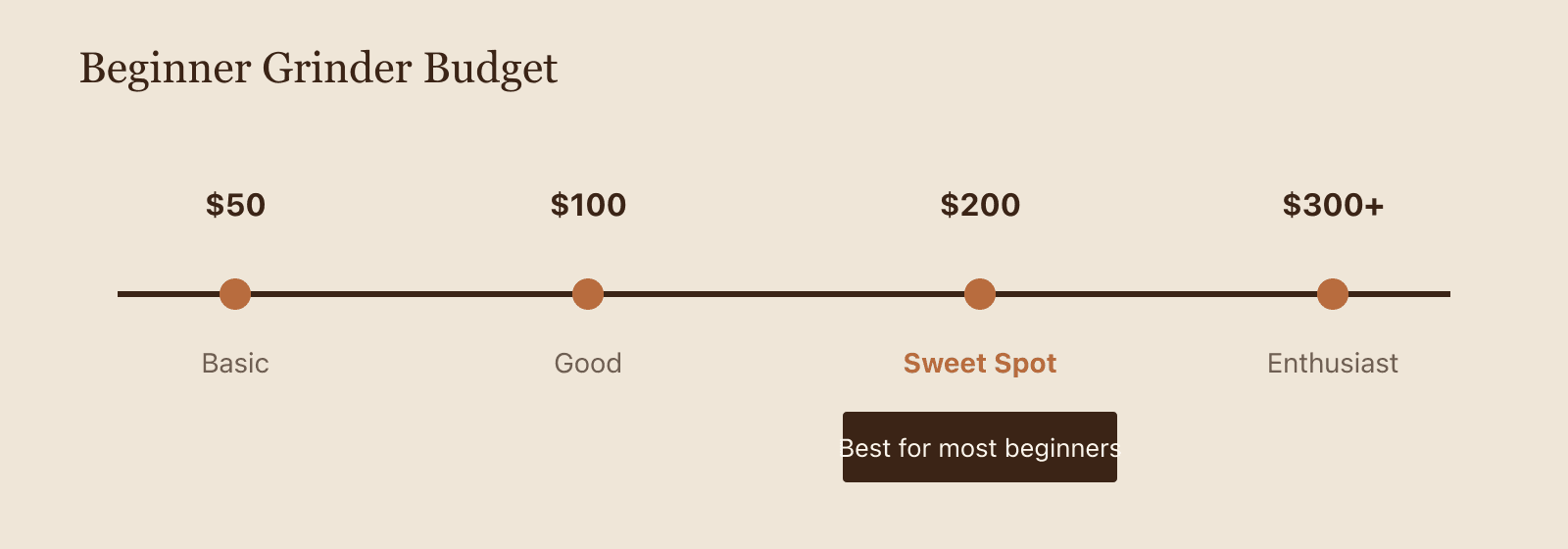
How Much Should You Spend?
Under ~$80
Basic travel / filter starters
Acceptable if it has real burrs—not blade-style choppers.
See options in this range →↓
$80–$150
Sweet spot for most manuals
Q2-class territory for pour-over, beginners, and travel kits.
See options in this range →↓
$150–$300+
Espresso-oriented / premium build
Buy only if you will use fine resolution weekly—otherwise an electric may be happier.
See options in this range →
Why Choose a Manual Coffee Grinder?
Advantages: more of the purchase price can go toward burrs and construction rather than a motor; excellent portability; low noise; no electricity; and strong grind quality for the money at mid budgets.
Disadvantages: physical effort, slower grinding, less convenience for multiple cups, and espresso settings that can require substantial grinding time. Manual is a tradeoff—not a free upgrade.
Manual vs Electric Coffee Grinders
Neither is universally better. Manual wins on quiet, portability, and grind quality per dollar at lower budgets. Electric wins on convenience when you brew multiple cups daily or dial espresso with frequent regrinds.
Full framework: Manual vs Electric Coffee Grinder.
Are Manual Grinders Good for Espresso?
Some are—if they offer fine, high-resolution adjustment and you accept longer grind times at espresso settings. Many compact travel manuals are optimized for filter and only marginally usable for espresso.
If espresso is your main drink and budget allows, an espresso-capable electric under $300 (Encore ESP, DF54, Sette-class) is usually the more practical daily driver. See best espresso grinders under $300, Encore ESP vs DF54, and what grinder should I buy for espresso?.
How to Choose a Manual Coffee Grinder
Burr quality and size: conical steel burrs dominate this category; prioritize known burr platforms over cosmetic finishes. Larger burrs can speed grinding but add size and cost.
Adjustment mechanism: external numeric indicators help repeatability; espresso needs finer resolution than pour-over—stepless or high step-count systems matter.
Espresso adjustment: ignore vague “espresso compatible” claims—look for fine control and community dial-in notes for your basket size.
Handle and ergonomics: stable body, comfortable crank, and bearings that do not wobble under load reduce fatigue.
Capacity, weight, and travel: match chamber size to your usual dose; travel kits favor compact, lighter bodies.
Cleaning: prefer designs you can disassemble without losing tiny parts. Still choosing broadly? Use the coffee grinder buying guide and beginner grinder picks.
FAQ
Are manual coffee grinders worth it?+
Yes when you value quiet operation, portability, or grind quality per dollar—and you brew one or two cups at a time.
Is a manual grinder better than an electric grinder?+
For value and silence at lower budgets, often yes. For daily multi-cup speed, electric is usually better.
What is the best manual grinder for espresso?+
Look for a high-resolution adjustment system designed for fine espresso settings, not only a compact travel mill. Many people still prefer an espresso-capable electric for weekday shots.
How much should I spend on a hand grinder?+
Most filter and beginner buyers do well between about $80 and $150. Spend more only if you need espresso-oriented resolution or premium build.
Are manual grinders better for pour-over?+
They can be excellent for pour-over because consistency per dollar is high and noise is minimal. Electric still wins if you brew large batches often.
Are manual grinders good for beginners?+
Yes for simple filter brewing and tight budgets. Choose electric if convenience matters more than price or quiet.
How long does it take to manually grind coffee?+
Often about 30–90 seconds for a single filter dose, longer for espresso-fine settings or larger doses. Exact time depends on burr size, roast, and grind setting.
Can a manual grinder grind fine enough for espresso?+
Some high-resolution manuals can; many compact travel mills cannot. If espresso is daily, an espresso-capable electric is usually happier.
Continue Building Your Coffee Setup
Comparing hand vs electric?
→ Manual vs Electric Coffee GrinderNew to grinders?
→ Best Coffee Grinders for BeginnersReady for an electric under $300?
→ Best Coffee Grinders Under $300Building a full station?
→ Best Coffee Setup Under $1,000
Related Coffee Standard Guides
Comparisons
Manual vs Electric Coffee Grinder
A clear choice framework before you pick a specific model.
Updated August 7, 2026 · 6 min read
Coffee Grinders
Coffee Grinder Buying Guide
The decision framework behind every Coffee Standard grinder recommendation.
Updated August 7, 2026 · 12 min read
Coffee Grinders
Best Coffee Grinders for Beginners
Easy, research-backed burr grinders that help new coffee drinkers choose with confidence.
Updated September 17, 2026 · 14 min read
Coffee Grinders
Best Espresso Grinders
Grinders that actually hold espresso settings day after day.
Updated July 5, 2026 · 9 min read
Coffee Grinders
Best Coffee Grinders Under $200
The price band where daily electric grinders start feeling “real.”
Updated August 7, 2026 · 9 min read
Coffee Grinders
Best Coffee Grinders Under $300
Research-backed picks when your grinder budget tops out around $300—not just espresso specialists.
Updated September 17, 2026 · 14 min read
Coffee Grinders
Best Coffee Grinders Under $100
Budget grinders that still beat blade choppers for daily coffee.
Updated August 7, 2026 · 8 min read